
The Cost of Waiting Another Season
Every fall, homeowners put off garage door maintenance to focus on gutters, furnaces, and windows. Then a strong wind event rolls through on the back of a cold front, and the garage door buckles, bows, or comes off its track entirely. At that point you're not looking at a routine tune-up anymore. You're looking at an emergency repair call, a damaged vehicle or stored belongings, and in worse cases, wind that gets inside the garage and pushes up on the roof structure from underneath. A door that fails during a storm costs far more than one serviced ahead of time, both in dollars and in the disruption of dealing with an open garage in bad weather.
Why the Garage Door Is Your Home's Weakest Wall
Most exterior walls are solid, continuous structures tied into the frame of the house. A garage door is a large moving panel held in place by tracks, rollers, hinges, and springs, with far less rigidity than the wall around it. When high wind hits a closed garage door, it's pushing against the single largest opening in the house. If the door flexes, cracks, or separates from the track, wind pressure can enter the garage and push outward against the roof and walls from the inside, which is a major contributor to structural failure in high-wind events. This is exactly why older, lighter-gauge doors without reinforcement are a real vulnerability on homes in this area, where seasonal wind swings are common.
Fall Wind Events Are Real, Not Just a Spring Problem
Severe storm season in this part of Missouri gets the most attention in spring, but fall brings its own round of strong cold fronts and gusty wind events as temperatures swing hard between warm afternoons and cold nights. These fronts can bring sudden straight-line wind gusts even without a tornado warning attached. Preparing the garage door now, before winter ice and road salt start taking a toll on hardware, means one inspection covers two seasons of risk instead of waiting until spring to deal with storm damage that happened months earlier.
Pre-Storm Inspection Checklist
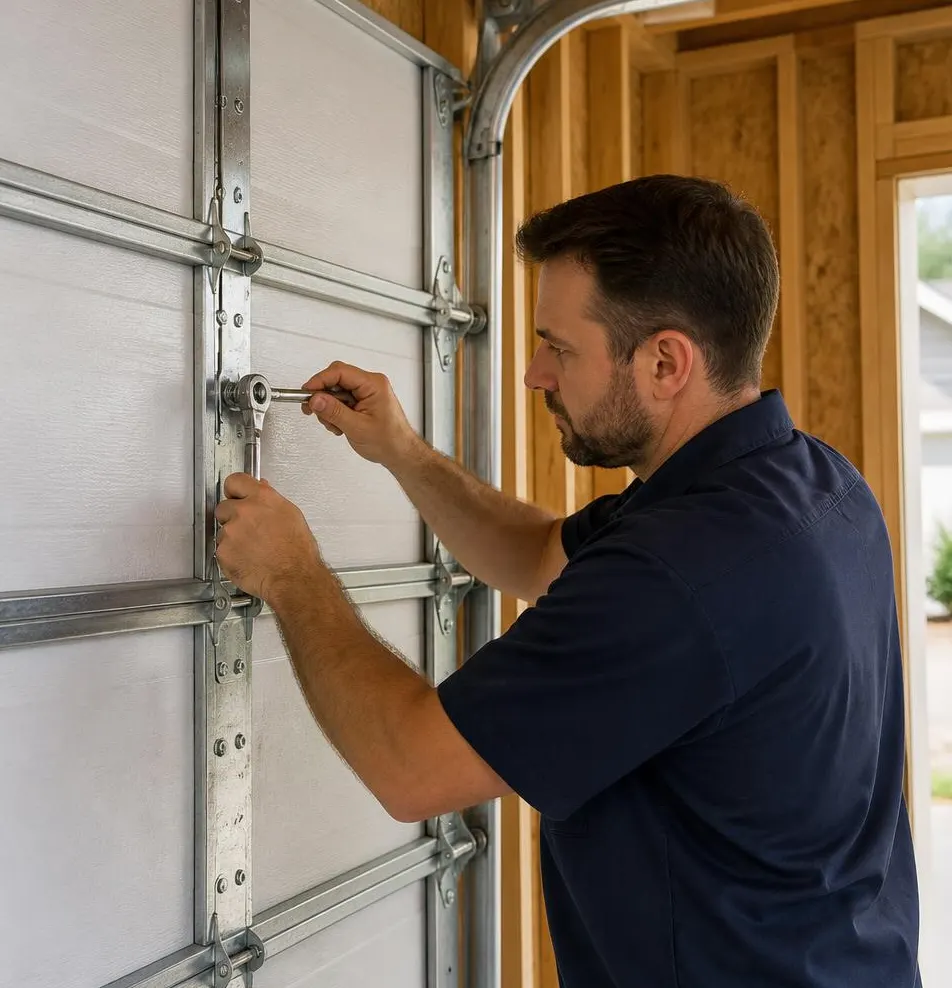
- Tracks and rollers: Look for bent tracks, worn or cracked rollers, and loose mounting brackets. A door that isn't riding smoothly in the track has less resistance to wind pressure.
- Spring tension: Springs under the wrong tension make the door work harder and fail faster under load. If the door feels heavy when manually lifted, or opens unevenly, the springs need attention before storm season arrives.
- Panel condition: Check for dents, rust spots, or delamination on panels. Weak spots in the panel are where wind pressure concentrates damage first.
- Weatherstripping and bottom seal: Cracked or missing seals let wind and water in around the edges, which adds pressure behind the door during a storm and lets moisture in ahead of winter freezing.
- Opener and backup power: Confirm the opener responds correctly and, if equipped, that any battery backup holds a charge. Power outages are common during severe weather, and a door stuck half-open is a liability.
Reinforcement Options Worth Considering
If the current door is original to an older home or shows visible flex when pushed on from the inside, reinforcement struts can be added horizontally across the panels to stiffen the door against wind load. For homes that see repeated high-wind events, upgrading to a heavier-gauge door with built-in wind resistance is a worthwhile trade-off against the cost of repeated storm repairs. These upgrades run in a wide range depending on door size and material, so it's worth getting a direct comparison between reinforcing an existing door versus replacing it with a storm-rated one.
Winter Prep That Doubles as Storm Prep
Once the storm-focused items are handled, the same visit is a good time to address what winter brings: lubricating hinges and rollers before cold stiffens them, checking that de-icing or road salt residue hasn't corroded exposed hardware, and confirming the opener's sensors aren't affected by condensation. Doing this in the fall means the door is ready for both wind events and the ice and temperature swings that follow.
When to Call Pleasant Hill Garage Door
If an inspection turns up a door that doesn't close evenly, springs that look stretched or rusted, or a panel with visible flex, it's time to call in a technician rather than wait and see. Pleasant Hill Garage Door handles spring replacement and full garage door maintenance visits that check tracks, hardware, and opener function in one trip, so storm readiness and winter prep get covered together instead of as separate emergencies later.
Don't wait for the next wind event to find out how your door holds up. Call Pleasant Hill Garage Door today to schedule a storm-readiness inspection for your Pleasant Hill, MO home.